My research investigates how design might operate when stripped of its inherited assumptions about control, efficiency, and authorship. I work at the intersection of graphic design and printmaking, treating tools and materials as collaborators rather than instruments—participants in making rather than passive recipients of intention.
This approach, which I call Careful Design, refuses design's typical framings. It questions the speed and invisibility of contemporary production. It lingers with uncertainty and allows time, chemistry, and perception to shape outcomes alongside my decisions. The work asks: what becomes visible when we slow down processes that have been optimized into instantaneity? What intelligence exists in our materials and tools that we've learned not to see?
My current research centers on experimental printing techniques that foreground these questions materially.
In one body of work, I use cyanotype—a 19th-century photographic process—with projected video rather than sunlight or static negatives. Five-hour looped projections onto folded, chemically-treated paper create images that emerge through duration rather than appearing instantaneously. Light in motion, chemical reaction, and three-dimensional surface collaborate to produce outcomes I cannot fully predict or control.
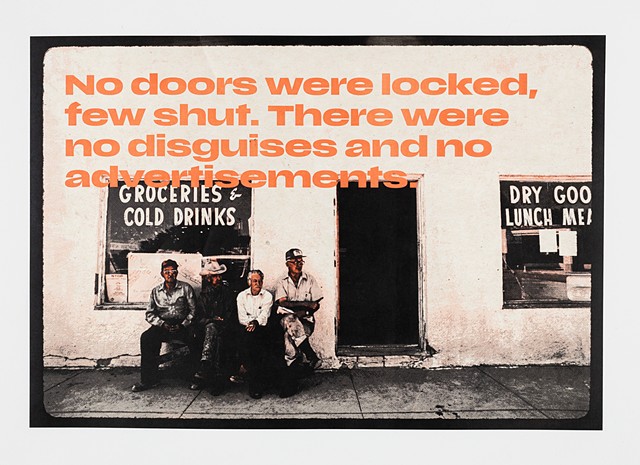
In another, I work with perceptual color reproduction based on Edwin Land's retinex theory. By carefully manipulating digital channel separations and layering only two inks (typically red and black), I create prints that produce full-color visual experience. The viewer's perceptual system completes what the printed page only suggests.
Both projects exist within what I call "(s)low-tech"—approaches that are careful, durational, and materially attentive rather than optimized or seamless. This isn't nostalgia for obsolete processes. These techniques respond to present and future realities: resource constraints, the need for methods that work with less, the value of processes that resist scale and automation.
The research also engages with questions of agency and collaboration beyond the human. Who or what is already designing alongside us? Our tools have intelligence embedded in their constraints and affordances. Materials have behaviors and preferences. Viewers bring their own perceptual systems to complete the work. Making is always collaborative, always relational, always more complex than a single author imposing will onto passive matter.
My work positions these understandings within contemporary contexts: ecological crisis, material scarcity, the failures of systems built on extraction and growth. It asks what kinds of making remain worthwhile when the assumptions that shaped our tools no longer hold. It explores how we might work when we can't—or shouldn't—assume unlimited resources, perfect control, or frictionless production.
This is research conducted through making. The questions are answered materially, in prints that bleed and misalign, in images that take hours to emerge, in colors that exist only in perception. The work doesn't solve problems. It reveals relationships, complicates processes, and makes visible what industrial logic has trained us to ignore.